Virtual Assistant (Chatbot)
Project Background
Project Details
Phase 1 of the project focused on creating a basic chatbot to support the Help Center (FAQs) within the MiniMed mobile app. In this initial stage, the virtual assistant surfaced relevant content from existing Help Center PDFs. The primary goal was to make Q&A easier for users and help them quickly find resources on how to use their MiniMed app.
Role: Content Designer
Company: Medtronic
Status: Delivered initial UX design and content October 2025
content process
Met with Product Marketing Managers, Engineers and UX Designer to kick off the project and discuss requirements, project plan and timeline, and the various use cases.
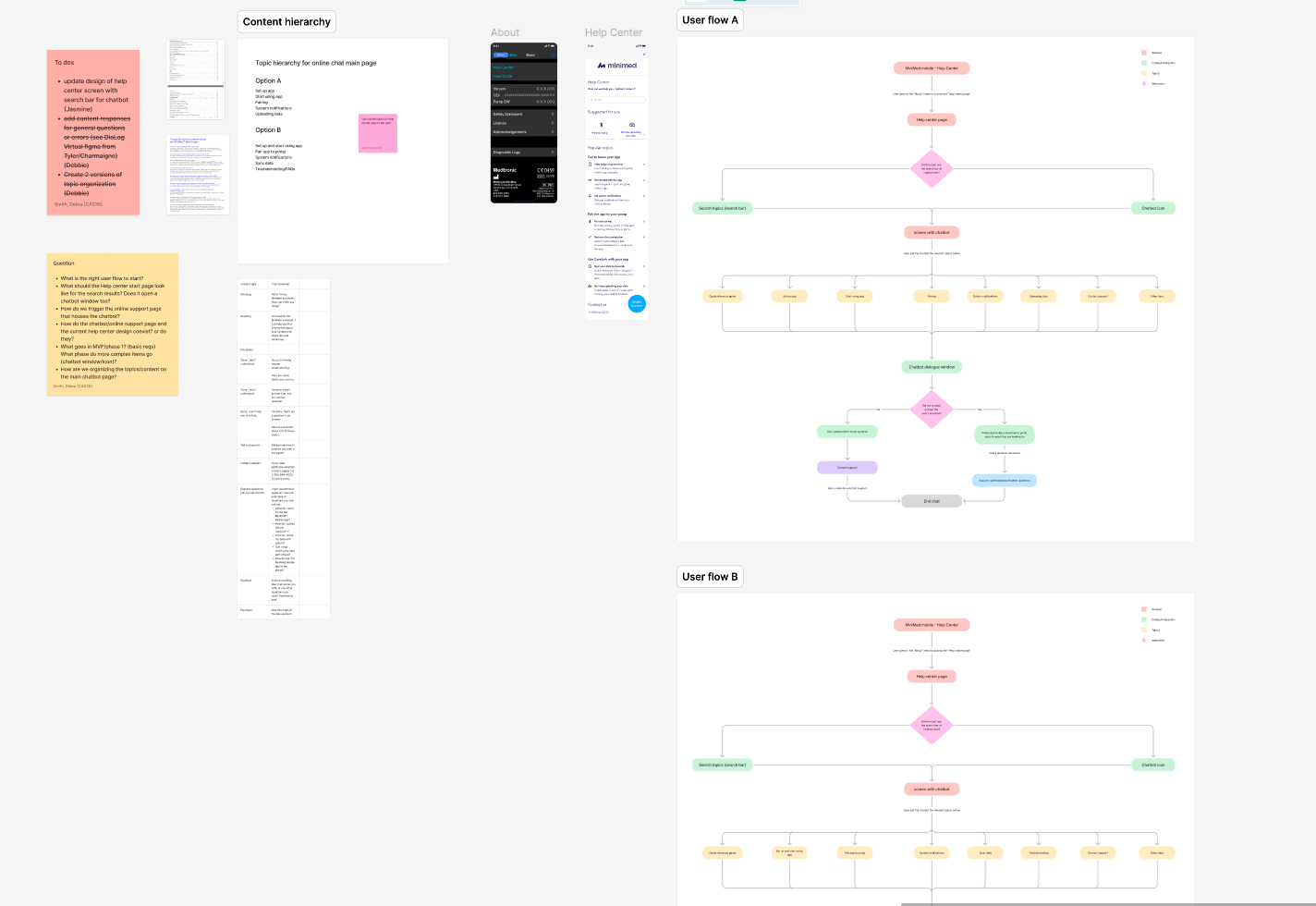
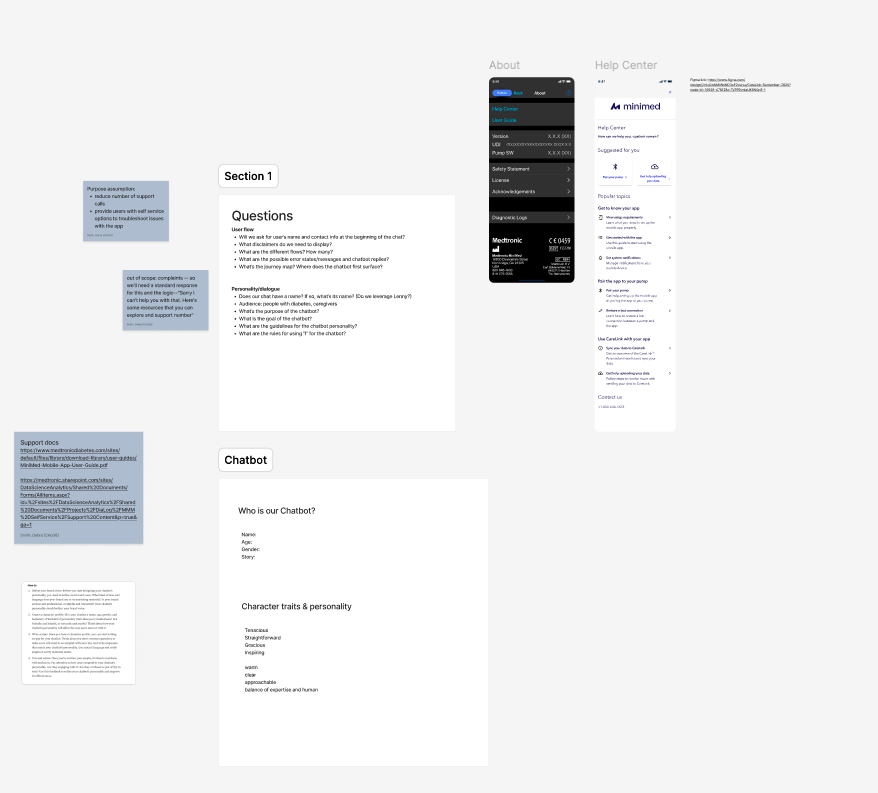
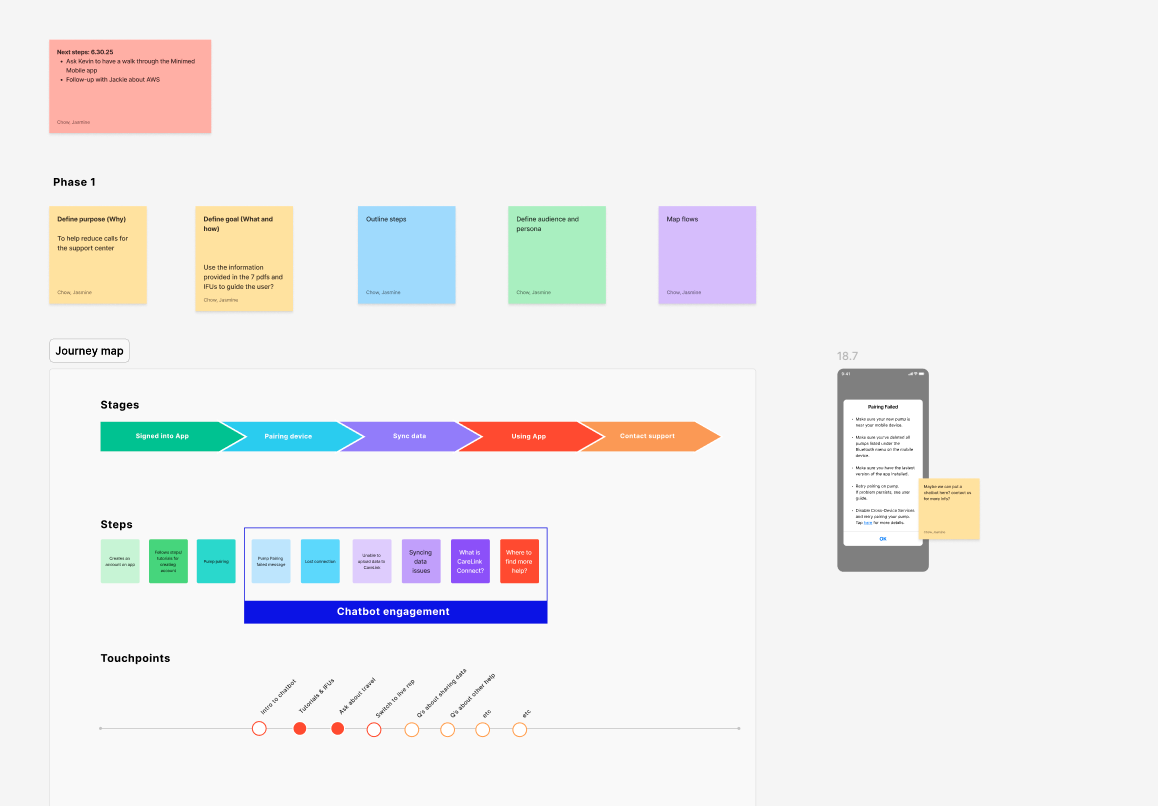
Worked with UX Designer to research and brainstorm, confining our initial work in a Figjam that included UX chatbot examples, a list of questions for the team, a UX journey map and user flow, content hierarchy, and an initial copy chart for content type and chatbot response.
Engaged with core team to get answers to our questions and initial reactions to our brainstorming materials and next steps.
Collaborated with UX Designer in live design sessions to draft initial UX content to support the Figma design and work through use cases based on our journey map.
Iterated content based on core team feedback.
Delivered first phase Figma UX design and content.
Deliverable
Figma design delivered October 2025. Next steps pending.
Content Design problem
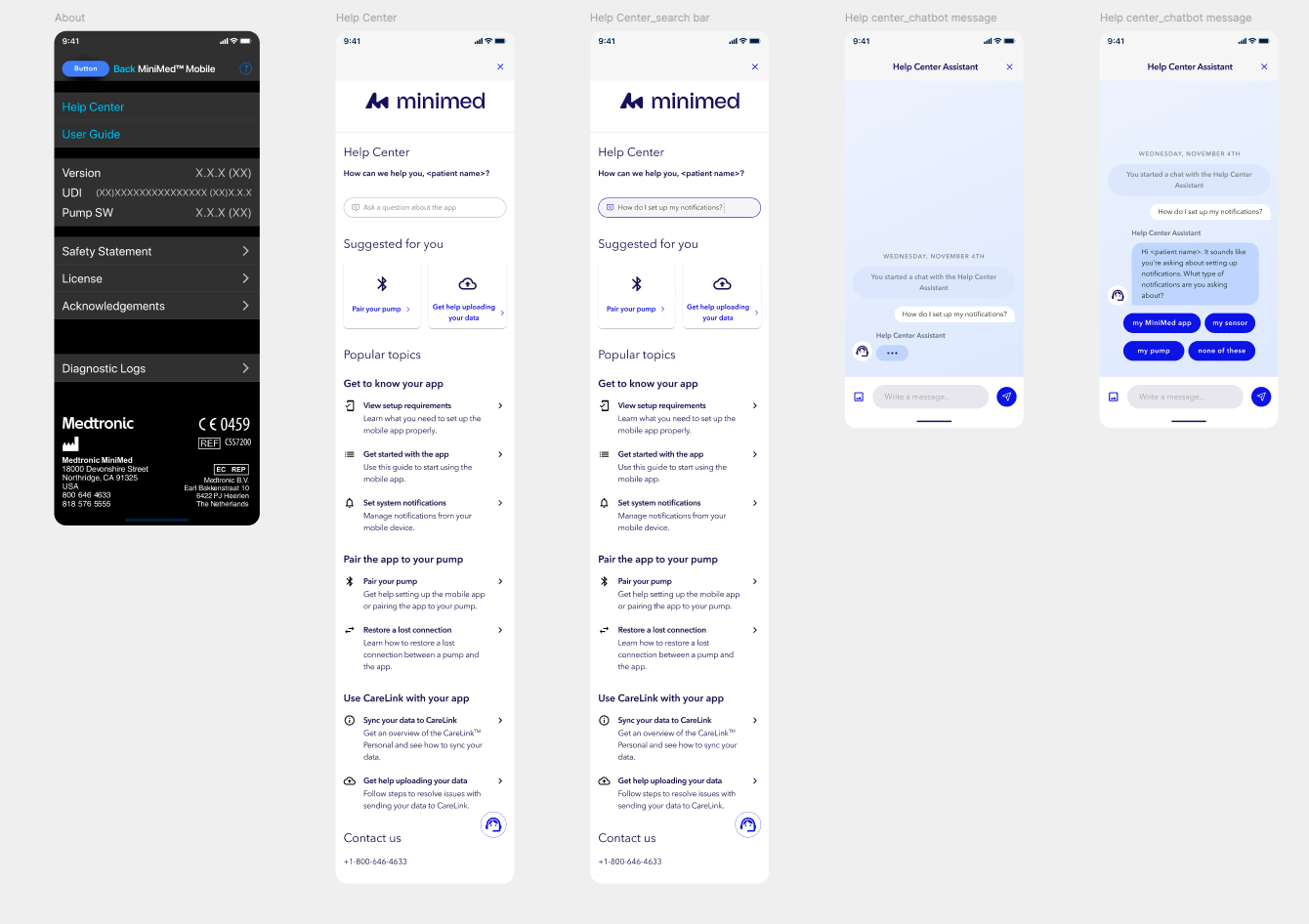
The MiniMed mobile app had a newly released Help page based on a set of FAQs that linked to specific PDFs. As a resource, the Help page provided very user-initiated help for task-related questions specific to using their MiniMed app.
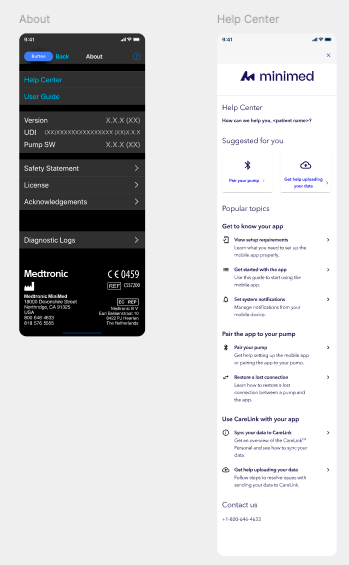
The next phase was to provide a document-retrieval chatbot or virtual assistant to help users retrieve more targeted answers using the same PDF resources.
Content Iterations
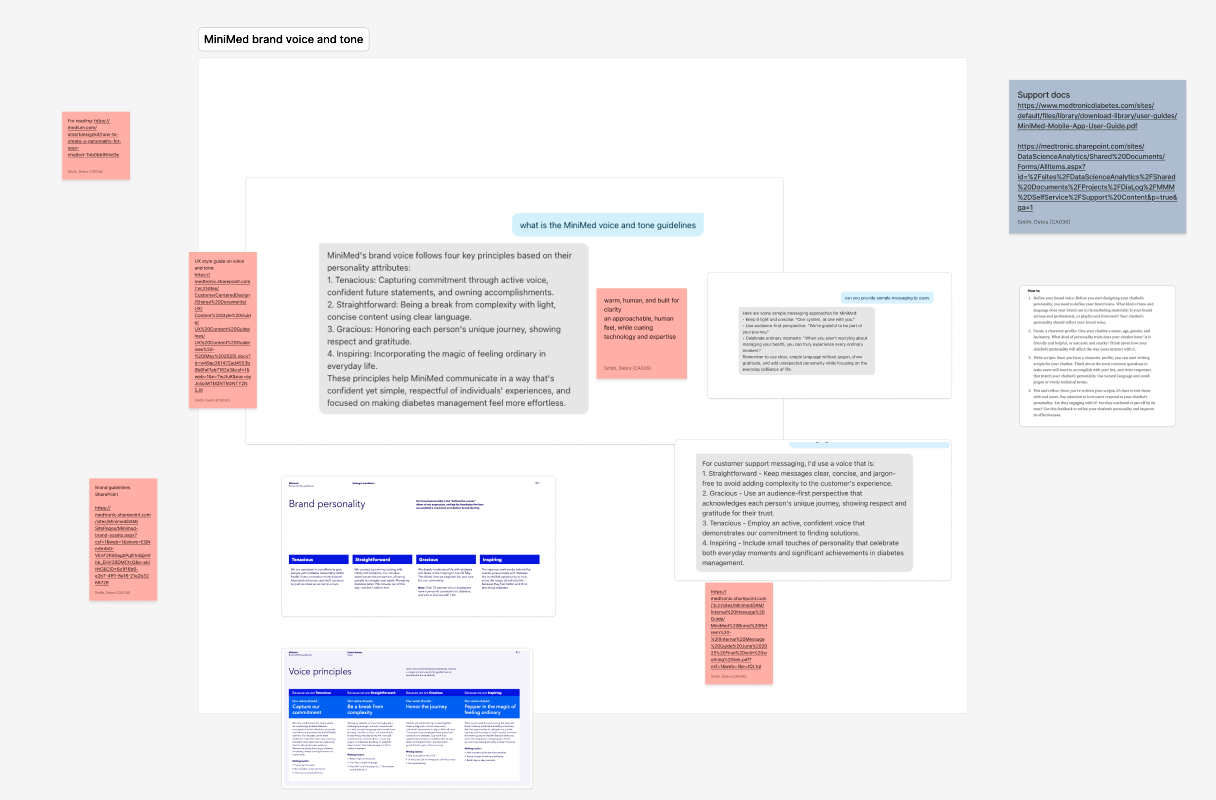
I collaborated closely with the UX designer throughout the project, especially during early brainstorming sessions when we had limited information. We began by gathering chatbot examples from platforms we used regularly as well as from competitors. To shape the content direction, I reviewed the brand voice and tone guidelines, and together we developed user flows and a journey map.
We also compiled a list of clarifying questions for the product manager and met with the technical team to understand expectations, requirements, and constraints. After evaluating the initial prototype created by the technical team’s intern, we returned to ideation with fresh insights. From there, I created a content hierarchy to guide the development of the chatbot’s responses.
Brainstorming sessions in Figjam
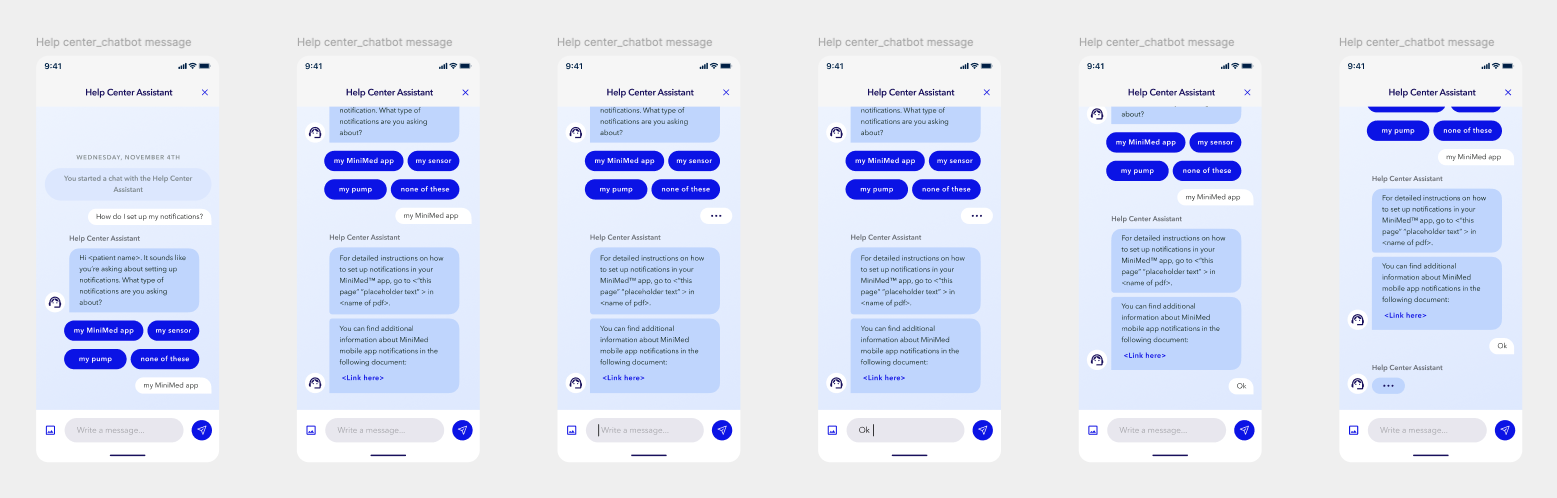
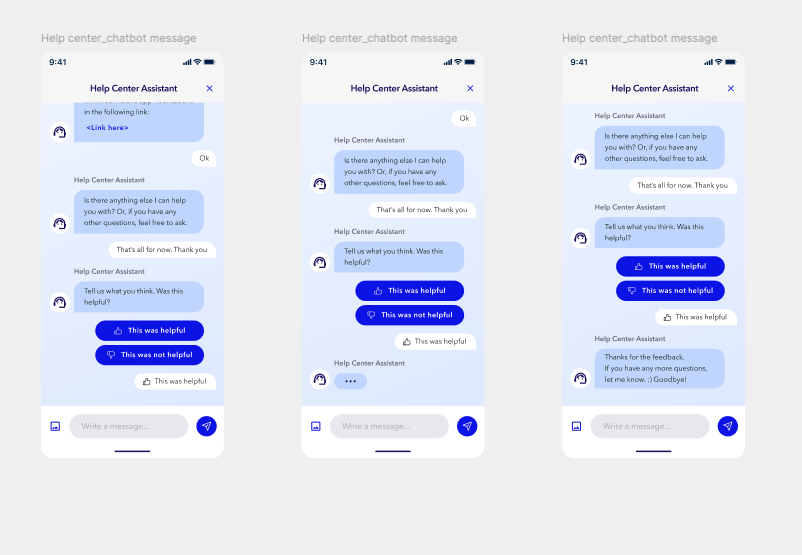
Happy path
The next phase of work was deep collaboration with the UX designer, entering content directly into the initial designs in Figma. Since this virtual assistant used a document-retrieval model, I made sure that the content came from the reference sources, which were seven PDFs.
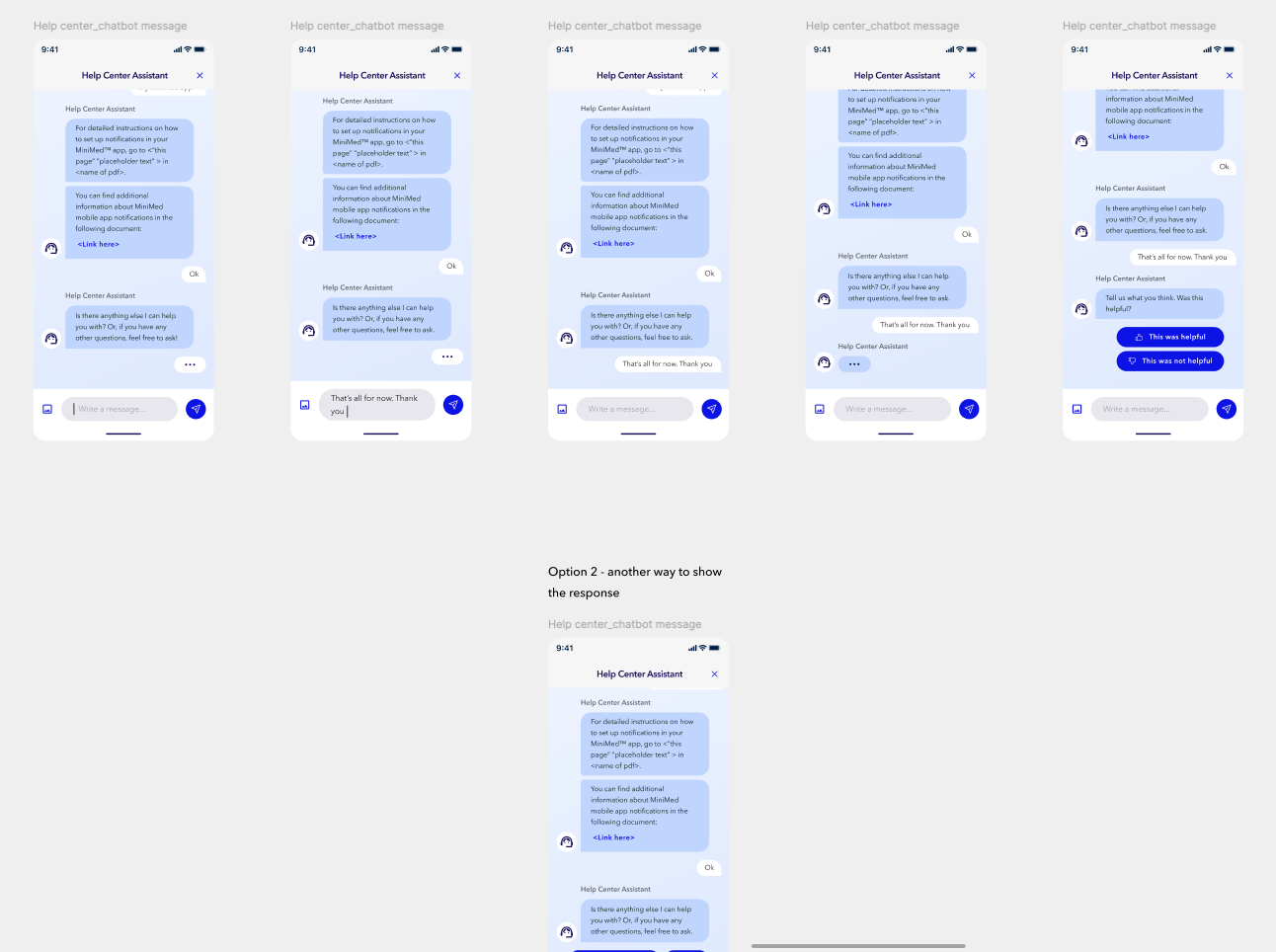
Unhappy path
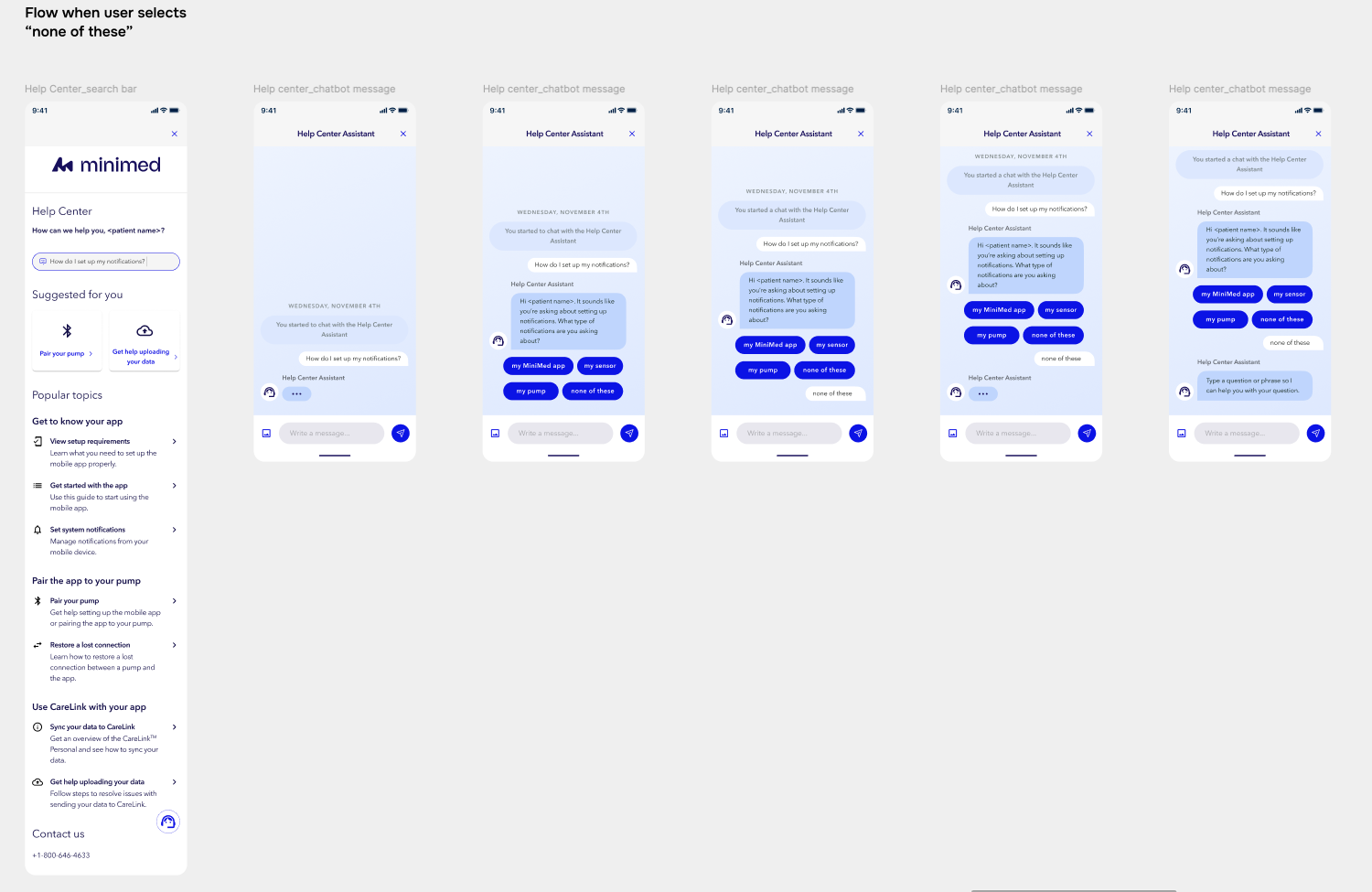
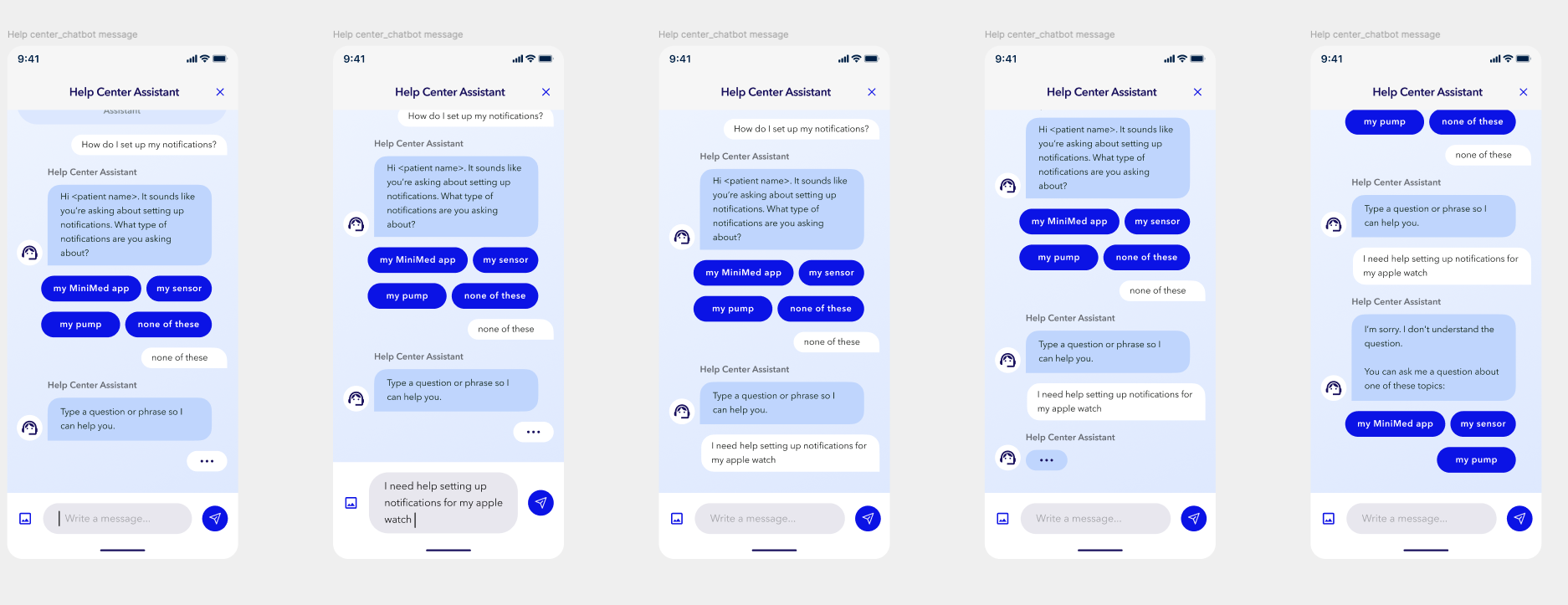
Use case 1: When user selects “none of these”
We also developed two unhappy paths. I refined the chatbot responses to account for situations where a user selects “none of these” from the list of options.
Unhappy path
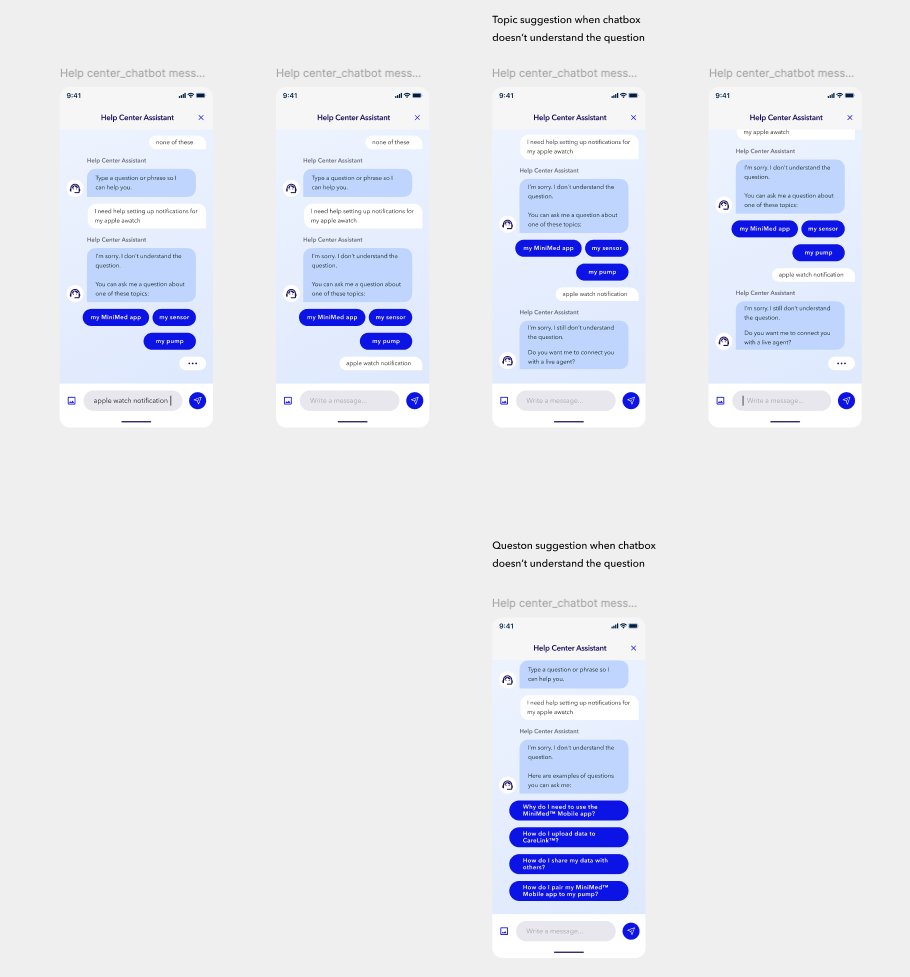
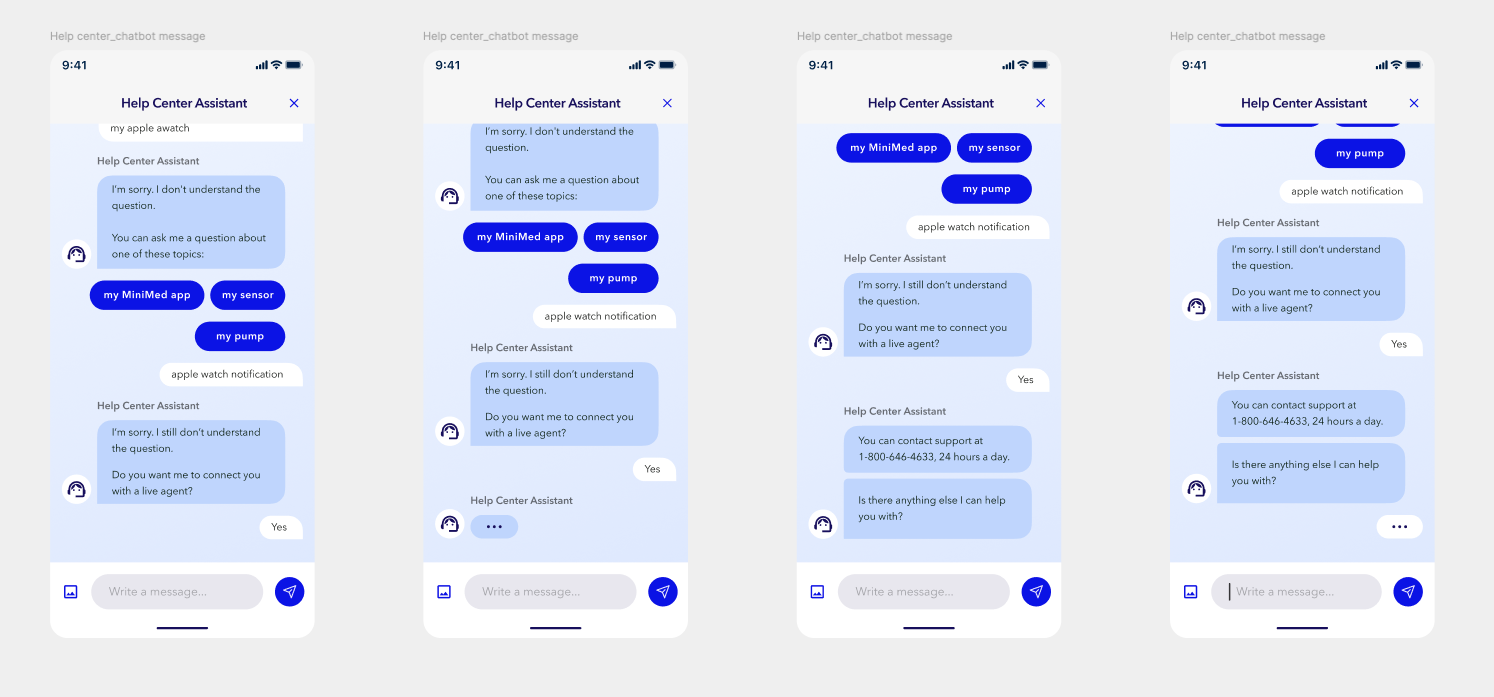
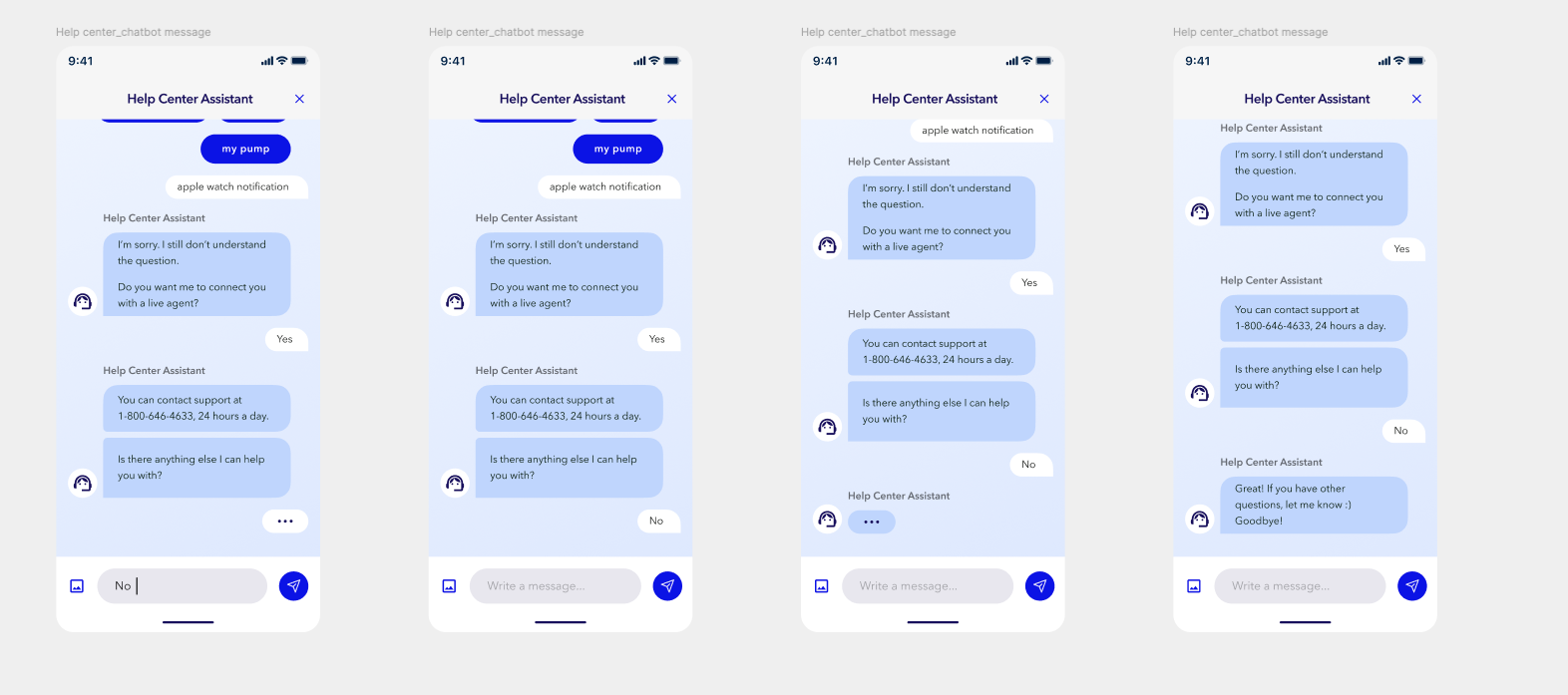
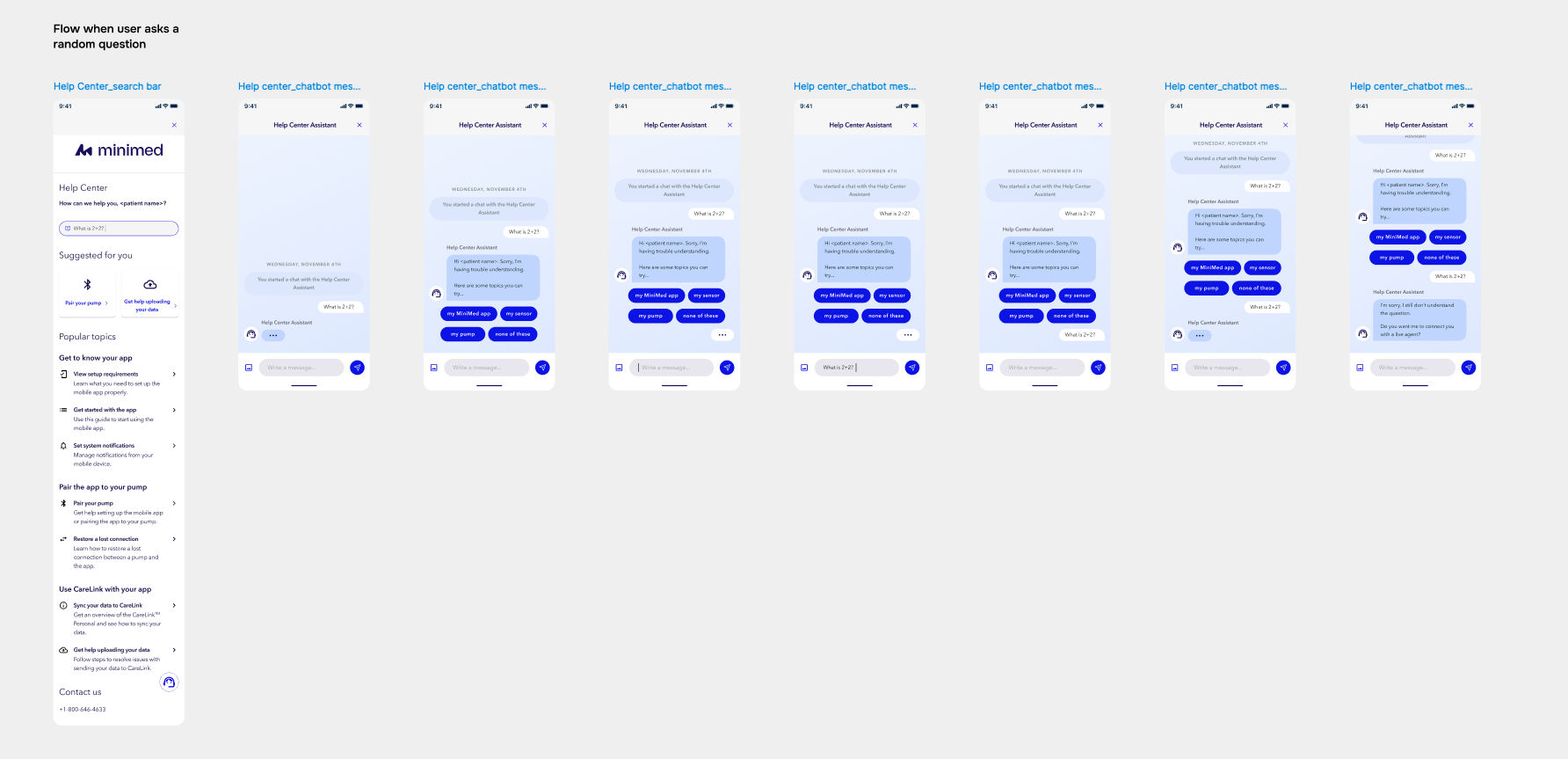
Use case 2: When user asks a random question
I also crafted chatbot responses for situations where a user asks a random question or brings up a topic unrelated to the available help options.
final design
Despite limited initial information and evolving requirements, we successfully delivered an MVP design in October 2025.
Insights
Collaboration and thorough requirements gathering were essential to delivering a strong final design. I especially enjoyed this project because it began with wide‑open, sky’s‑the‑limit possibilities. From there, the UX designer and I partnered closely to gain clarity and direction from stakeholders. As requirements evolved, we adapted quickly and ultimately delivered a design we were both proud of—one that genuinely supports the user, which was always the primary goal. I’m also confident that the final solution is future‑ready, allowing the virtual assistant to evolve and scale toward a generative AI experience.